Murmurs LA is pleased to present Horse to Water, a solo exhibition by Estefania Puerta, on view January 24 - March 1, 2026.
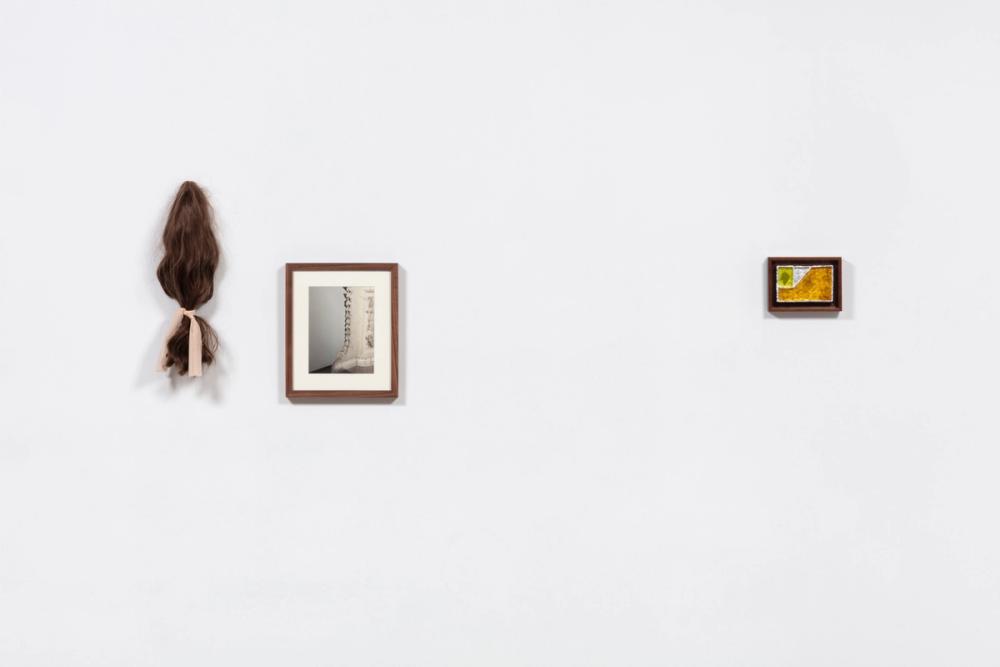
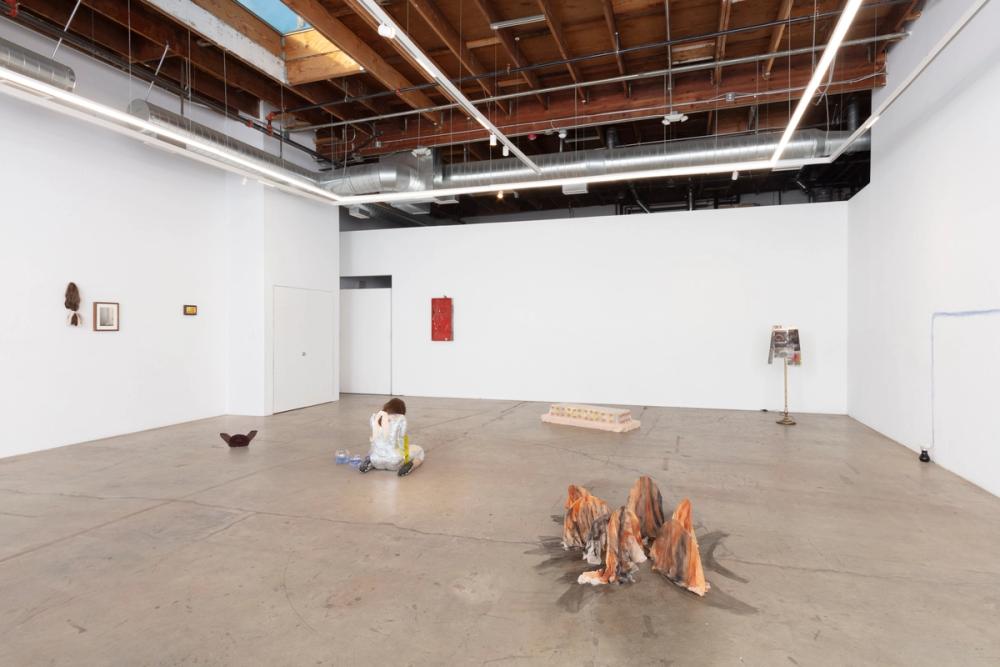
Works in Horse to Water span sculpture, installation, video, painting, and drawing, considering structures and containers not as static objects but as charged, liminal sites—purgatories where life, death, past, and futurity remain in flux within imposed frameworks. These forms reflect ancient vessels—tombs, wombs, reliquaries—while simultaneously exploring speculative, fictionalized futures of generation. Each is an expression of potential, where purpose and desire transcend corporeal boundaries.
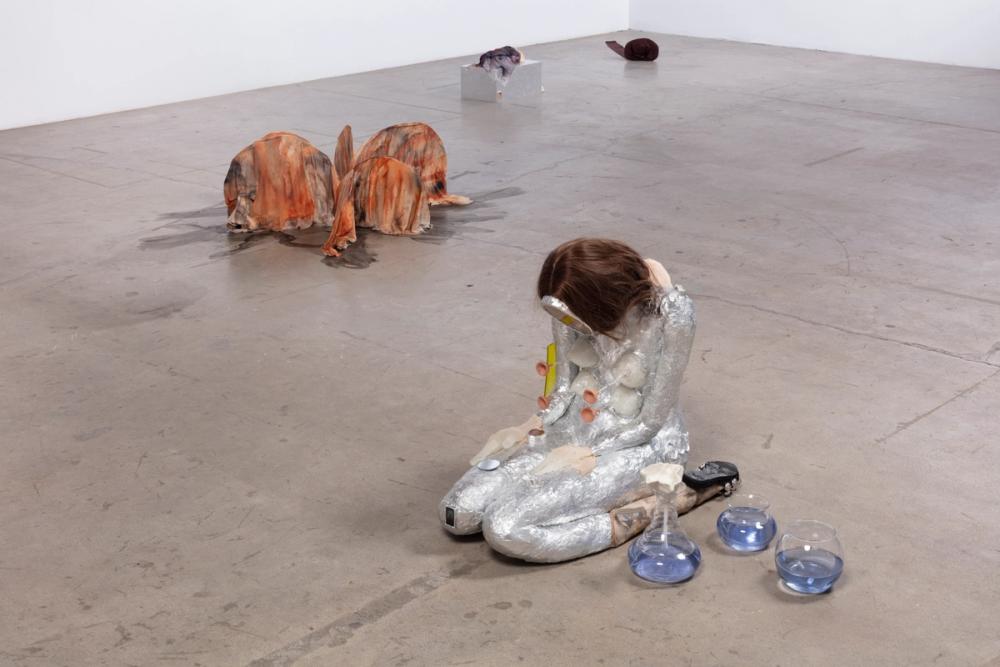
Meaning is wrestled into being: a clock that counts only seconds refuses narrative; a central figure functions as a projection site, becoming whatever or whomever the viewer imagines. Its face is a photograph by Puerta depicting sections of the fresco, Scenes from the Catherine Legend, 1425-31. Castiglione Chapel, San Clemente, Rome). The image is partially obscured by a grid which frames and filters, establishing distance as a condition of viewing.
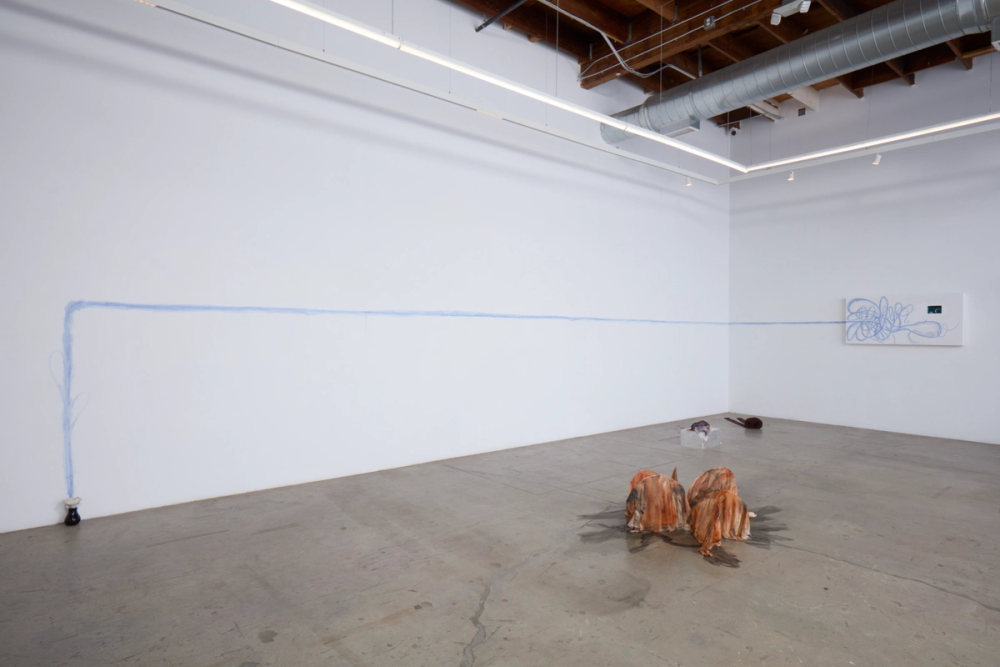
Fabric draped over skeletal armatures are winged creatures, almost screens. These surfaces receive and refract the central silhouette, mediating its presence and metaphoric resonance. A drawing of a marble bust, pierced by a rod through the head, recalls historical sculpture and museum display, where structure scaffolds the body and history is anchored by material weight.
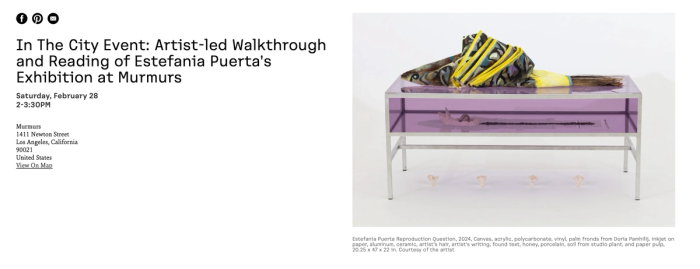
Ideas of women recur as icons of melancholy and desire—recalling Renaissance painting and literary archetypes while decidedly resisting them. Puerta approaches containment as an active, unyielding condition. Boxes, pedestals, incubators, and sarcophagi act as instruments that shape how bodies, objects, and artifacts are defined, held, and preserved, continually tracing what is transmuted through repetition, what seeps beyond borders, and what endures–or is lost–through reproduction and failure of circumscription.
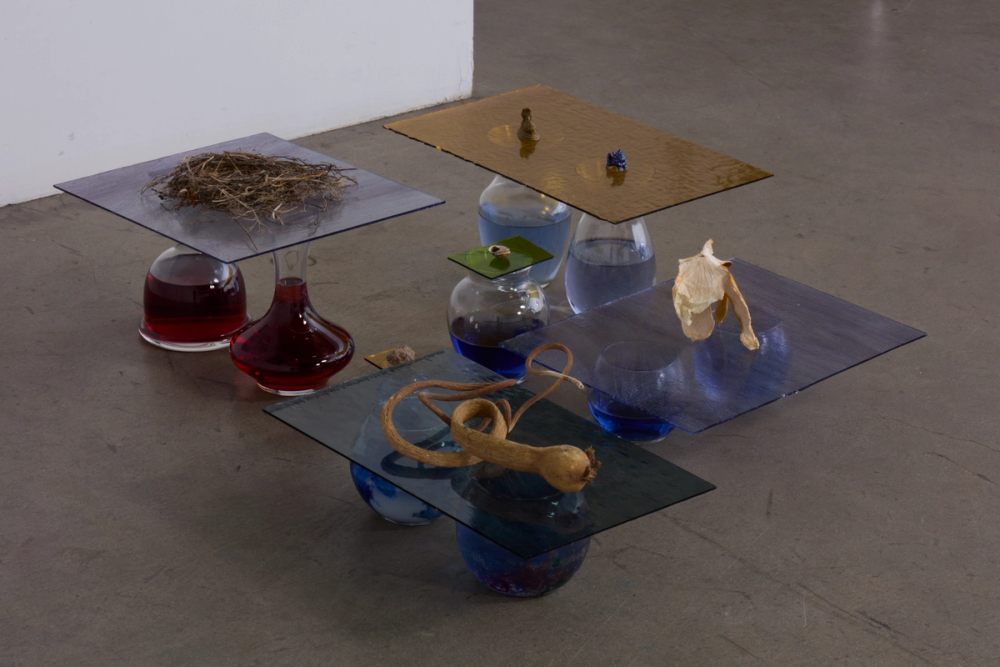
Stained glass rests on vases, evoking cathedral light and mythic architectures of creation, rendering domestic spaces into storied, elemental geometries. Elsewhere, pantyhose stretch and sag across wire nets, acting as second skins—at once classical, absurd, and tender.
In a separate room, looped video footage from a wildlife camera records whatever happened in the woods (outside the studio) as Puerta worked. What was captured introduces a sense of simultaneous time shaped by longing, possibility, and the malaise of artistic practice. Used to observe as much as to consume, the wildlife camera dissolves lines between human and animal, wild and witnessed.
Horse to Water resists conclusion. It lingers in passage, in becoming and undoing, in the effort of working something—slowly, sadly, uncertainly—into being. Objects designed to sustain life rehearse death; sites of care echo control. Containment is not an end point but a condition—fragile, romantic, and restless—always threatening to slip away.
Words by Abbey Meaker